When I first started learning web development, I wasn't chasing anything fancy. I just wanted to build something that felt alive on screen.
That curiosity led me to two small but meaningful projects — both built under the OnGameClips brand I was experimenting with at the time. Looking back, they were simple. But at the time, they taught me more than any tutorial ever could.
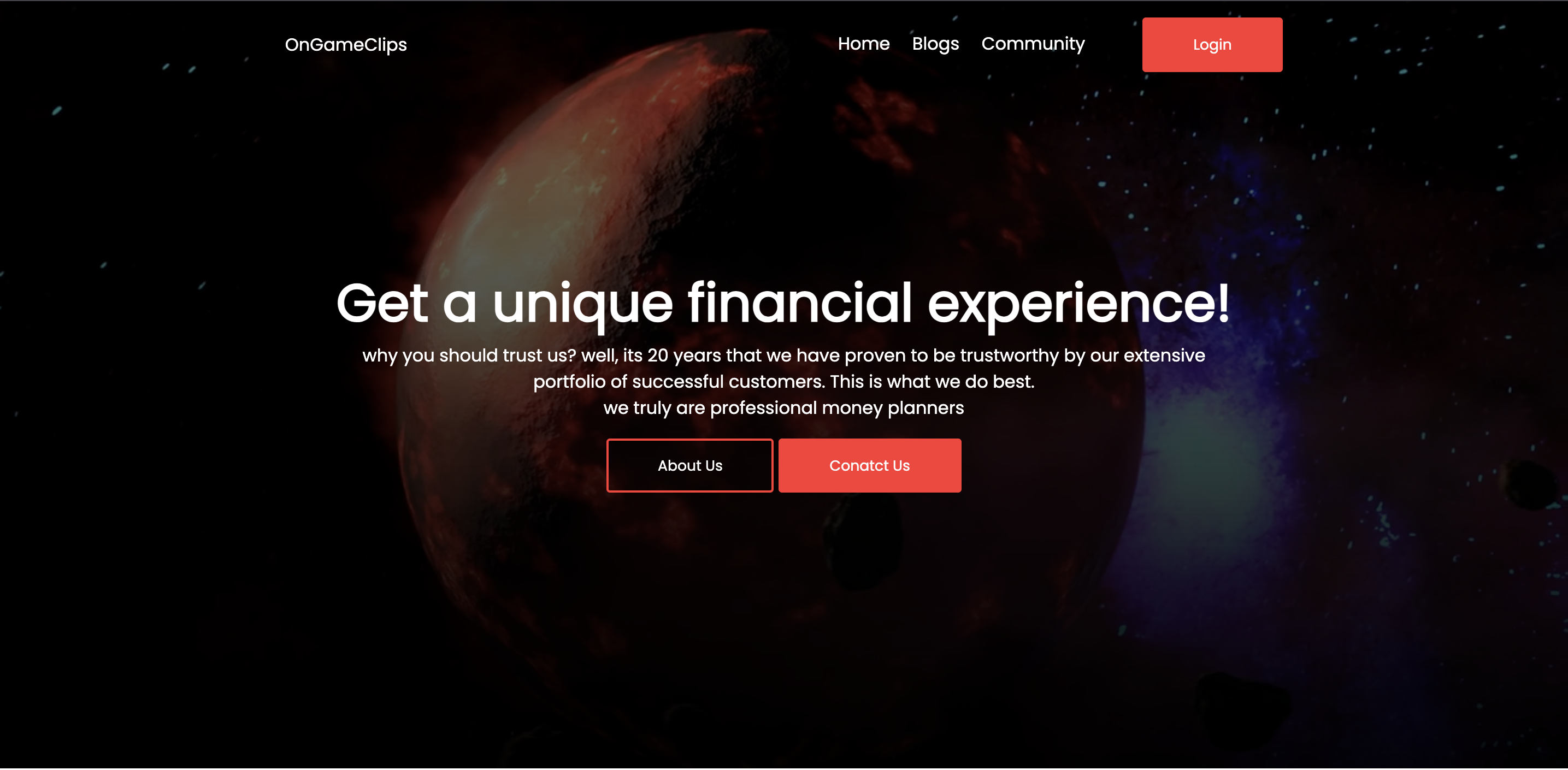
The first was a hero video website — a full-screen background video with a financial services theme layered on top. The challenge sounds trivial now: get a video to play silently in the background without disrupting the rest of the page. But when you're starting out, figuring out autoplay policies, muted attributes, and z-index stacking feels like solving a puzzle in the dark. When it finally worked, I genuinely felt proud.
The second pushed me further. I started experimenting with scroll-triggered events — making elements respond as the user moved down the page. The tech circuit board aesthetic was deliberately dramatic, something that looked bold even if the underlying code was still beginner-level. It taught me that design intent matters as much as execution.
Both projects were built with plain HTML, CSS, and JavaScript. No frameworks, no libraries. Just the fundamentals.
They're not the most complex things I've ever built. But they're the ones that showed me I could actually do this — that I could take an idea, sit with a problem long enough, and ship something real.
Every developer has projects like these. The ones nobody else thinks much of, but you remember exactly how it felt when they worked.
These were mine.